Method Name
values
Method Signature
values()
Method Overview
- Using a Python dictionary data can be organised using keys. The data stored against a key is called a value. The dict class of Python organises key-value pairs as a dictionary. The keys in a Python dictionary are unique. A dictionary can not have two keys with the same value.
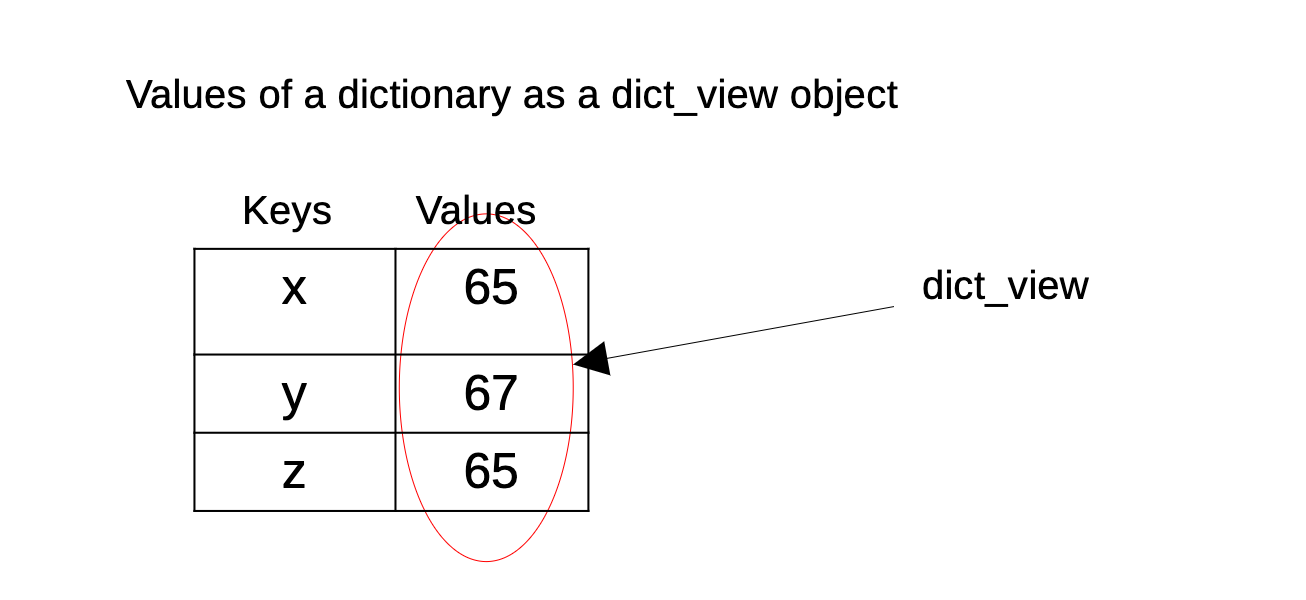
- A dynamic view of the dictionary values can be obtained by calling the dict method values().
- The dict method values() returns the values of the dictionary as dict_values instance.
- Contents of the dict_values changes when the dictionary is changed of a value.
Parameters
None
Return Value
A dictionary view of type dict_values.
Example
# Example Python program that obtains a view

            # of the values from a Python dictionary

            d1 = {"x":27, "y":-2, "z":5}

            vals = d1.values()

            print("Values present in the dictionary:")

            print(type(vals))

            print(vals)

# Change the value of y

            d1["y"] = -4

# Witness the dictionary changes from the view

            print("After changes in values of the dictionary:")

            print(vals)
Output
Values present in the dictionary:

            <class 'dict_values'>

            dict_values([27, -2, 5])

            After changes in values of the dictionary:

            dict_values([27, -4, 5])