Overview
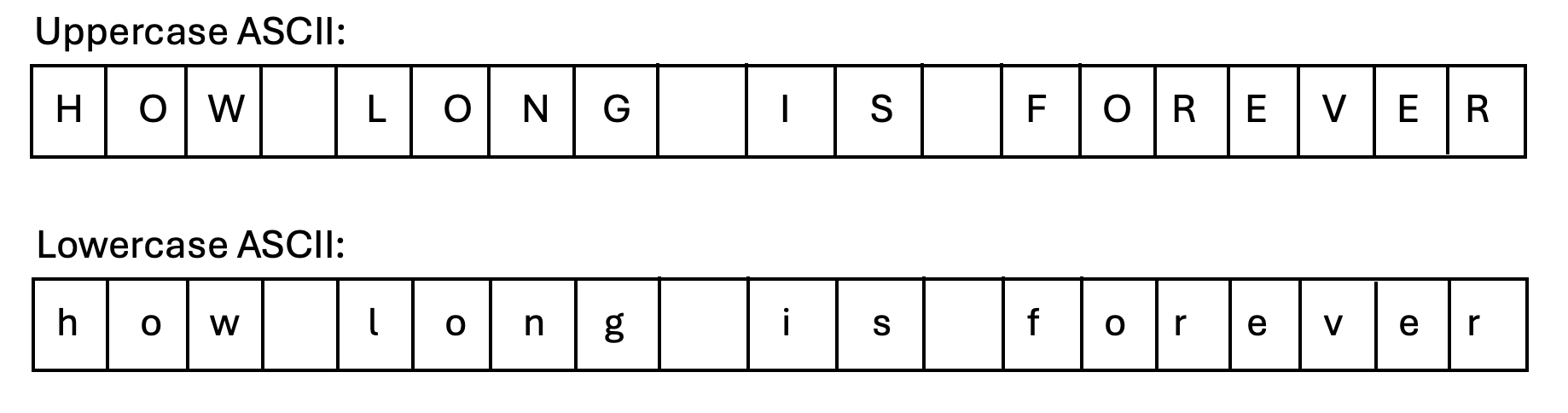
- The lower() method of bytearray class creates a lowercase version of the bytearray contents and returns it. The method does not change the bytearray in-place. A bytearray in Python can hold ASCII and the bytes corresponding to values up-to 255. The uppercase ASCII values are translated to lowercase ones in the new bytearray.
- If the use case is to get the lowercase copy of a Unicode sequence, the lower() method of the Python string class can be used. A string in Python is a mutable sequence of Unicode codepoints with a specified encoding.
Example
# Example Python program that converts

            # a bytearray containing ASCII values to

            # corresponding uppercase values

# Create a mutable sequence of ASCII values

            buffer = bytearray(b"HOW LONG IS FOREVER")

            print(buffer)

# Convert uppercase from lowercase values

            translated = buffer.lower()

            print(translated)
Output
bytearray(b'HOW LONG IS FOREVER')

            bytearray(b'how long is forever')