Method signature
replace(old, new, count=-1)
Parameters
old - The subsequences that is to be found and replaced.
new - The subsequence with which the found subsequences to be replaced.
count - Number of replacements to be performed.
Return value
The new bytearray object with the find and replacements in-place.
Overview
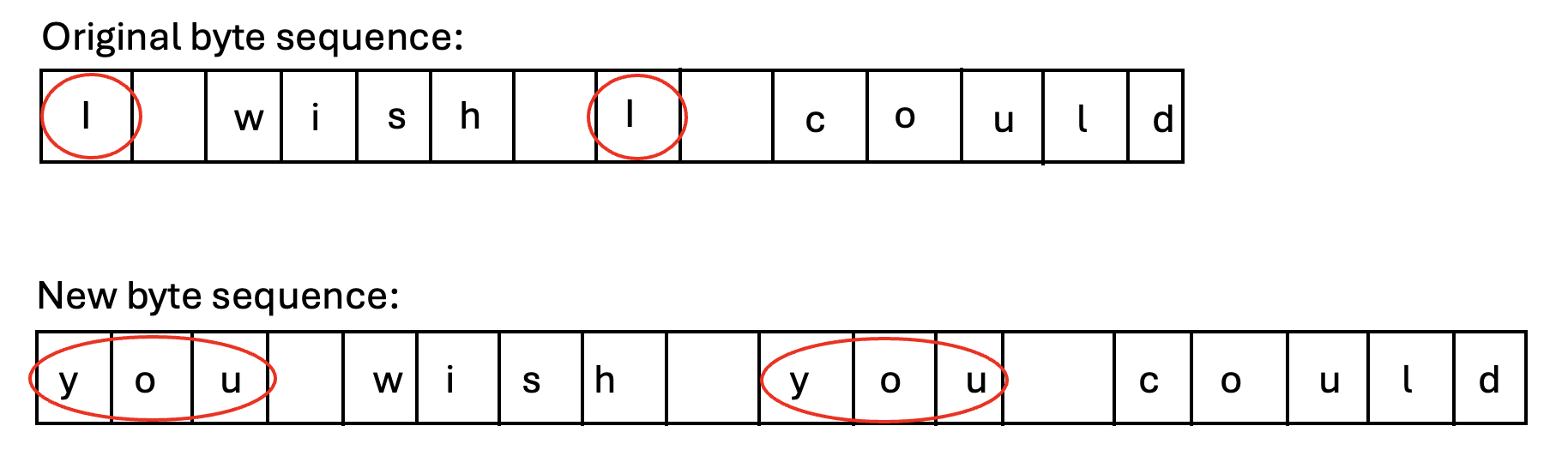
- The replace() method of bytearray does a find and replace for a given bytearray obejct and returns the new bytearray. The “find” subsequences are replaced with the “replace” subsequences in the new bytearray.
- A count can be specified to do find and replace only the “count” number of times. Further occurrences of the "find" subsequences are retained without replacement.
Example 1 - Perform find and replace on a Python bytearray
# Example Python program that uses the bytearray method

            # replace() to get a new bytearray with specified subsequences

            # replaced with the new subsequences

# Create a byte sequence

            byteSequence = bytearray(b"I wish I could manage to be glad")

find = b"I"

            replace = b"you"

# Find and replace

            newSequence = byteSequence.replace(find, replace)

# Print the new byte sequence

            print(newSequence)
Output
bytearray(b'you wish you could manage to be glad')Example 2 - Replace old with new on a bytearray for count number of times
# Example Python program that does

            # the "find and replace" operation

            # for the specified "count" number of

            # times on a bytearray

# Create a byte array

            byteSeq = "A pleasant walk, a pleasant talk"

old = "pleasant"

            new = "nice"

            count = 1

# Replace old with new byte sequence

            newbyteSeq =  byteSeq.replace(old, new, count)

            print(newbyteSeq)
Output
A nice walk, a pleasant talk